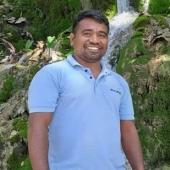
Mario Gomes, Field Coordinator, WorldFish TL, Timor Leste

Speaker
19 - 21 May 2026
Bangkok, Thailand
About the speaker:
Mario works closely with remote communities on Atauro Island, providing training in seaweed farming. They have their own seaweed farm there, which not only helps the community but also supports his family and hischildren’s education.
Seaweed farming is a major economic activity on Timor-Leste's Atauro Island, providing income, especially for women, and food security, with farmers cultivating varieties for domestic use and export (to Indonesia, South Korea, China) for carrageenan. While a boon for the island's economy, farmers face challenges like climate change (causing "ice-ice" disease), limited infrastructure for distribution, and volatile markets, though organization WorldFish support adaptation and climate resilience.
Key Aspects of Atauro's Seaweed Industry:
Economic Importance: Supports over 1,200 farmers, providing vital income and reducing reliance on mainland Dili.
Farming Practices: Farmers use techniques to grow seaweed in the ocean, with some activities supported by projects focusing on climate-resilient methods like floating rafts.
Products & Markets: Harvested seaweed is used domestically and Exporte, particularly for its carrageenan content, used in food processing.
Atauro Piloting of Seaweed Bio-stimulants and Liquid Organic Fertilizer
Mario has experience using biostimulants to grow corn and water spinach (kangkung) in Atauro. He received training from Yasuda on how to test these biostimulants to help crops survive and thrive during the dry season.
A three-day monitoring and upscaling activity took place in Atauro to assess the efficacy of piloting a seaweed biostimulant and liquid organic fertilizer (LOF). The study focused on corn plants cultivated in polybags under various biostimulants seaweed (BIOSEA) treatments in comparison to untreated control plants.
Company info:

WorldFish’s Timor-Leste country program works with the government, non-governmental organizations (NGOs), private enterprises, and local communities to improve nutritional outcomes by boosting aquaculture and small-scale fisheries production. The program is harnessing the potential of aquatic foods to transform Timor’s food systems to sustainably meet the nutritional needs of the country.
The program engages key components of food systems with the aim of optimizing production, postproduction handling and processing, marketing, and consumer knowledge and choice. To enable these outcomes, the program implements a systems approach, integrating aquatic animal biosciences with a focus on governance, climate adaptation, and gender empowerment in fisheries and aquaculture systems.
Seaweed Farming on Atauro Island:
In Timor-Leste, seaweed farming is concentrated on Atauro Island, located about 25km north of Dili. Seaweed farming has many opportunities: it is a regenerative aquatic resource, providing highly nutritious food and income, particularly for women who often farm the seaweed.
However, seaweed farming in Timor-Leste faces numerous challenges. There are marketing barriers: fresh seaweed distribution beyond Atauro is difficult due to limiting infrastructures, while international demand for Atauro’s dried seaweed is hampered by volatile markets and limited export facilities in Timor-Leste.
Meanwhile, there is limited technical capacity, and increasing sea surface temperatures are associated with slowing growth cycles and outbreaks of ice-ice, a bacterial infection characterized by bleaching and disintegration of affected areas of seaweed branches.